
PPID (Cushing’s Disease)
Helping Horse Owners Understand and Manage PPID
Supporting horse owners with practical information and nutritional support.
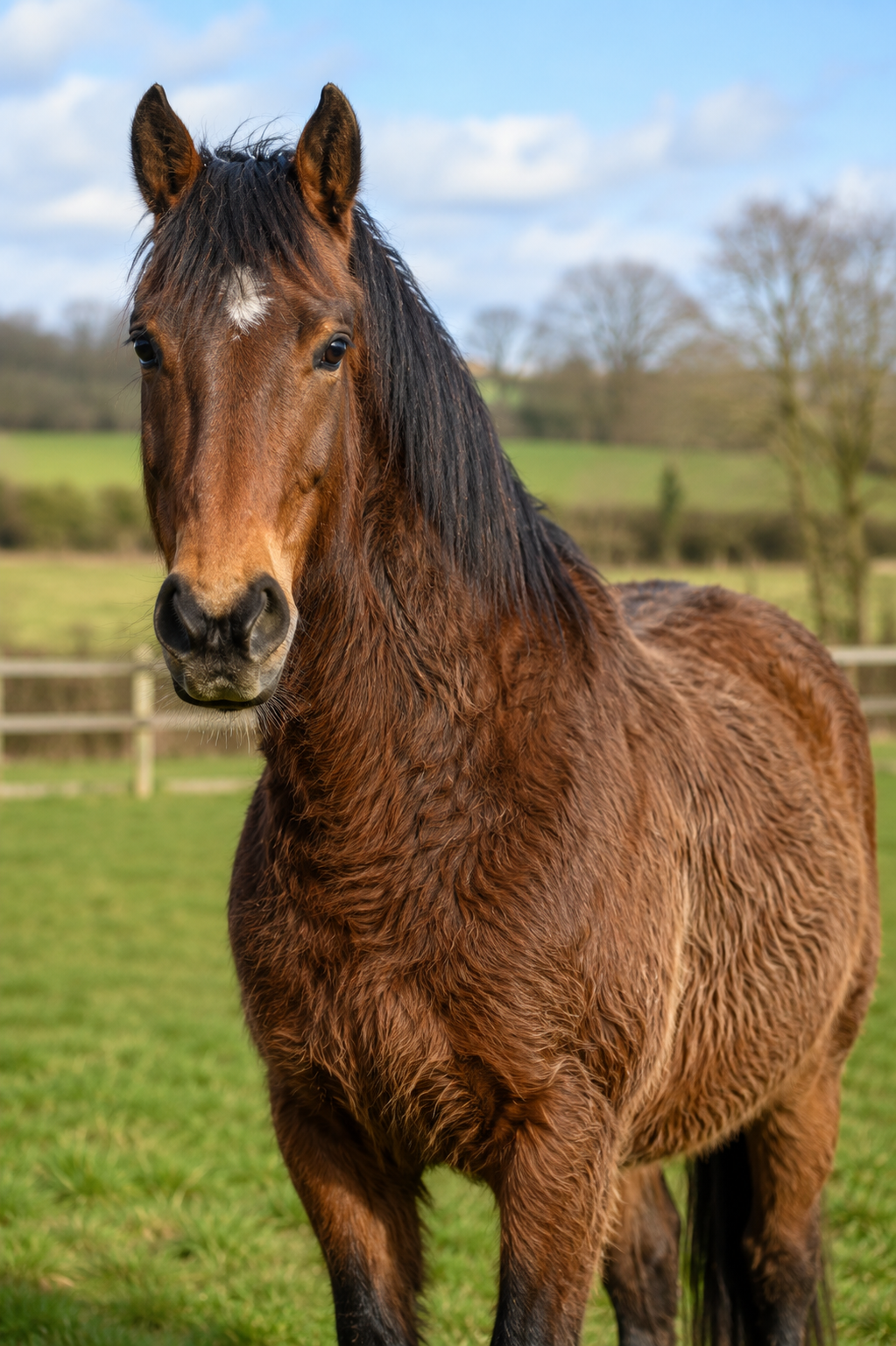
⚡ Quick Facts
- PPID is commonly known as equine Cushing’s disease.
- It is most frequently diagnosed in older horses and ponies.
- Early signs can be subtle and easily mistaken for normal ageing.
- PPID can increase the risk of laminitis.
- Veterinary treatment and regular monitoring are usually lifelong.
🩺 What is PPID?
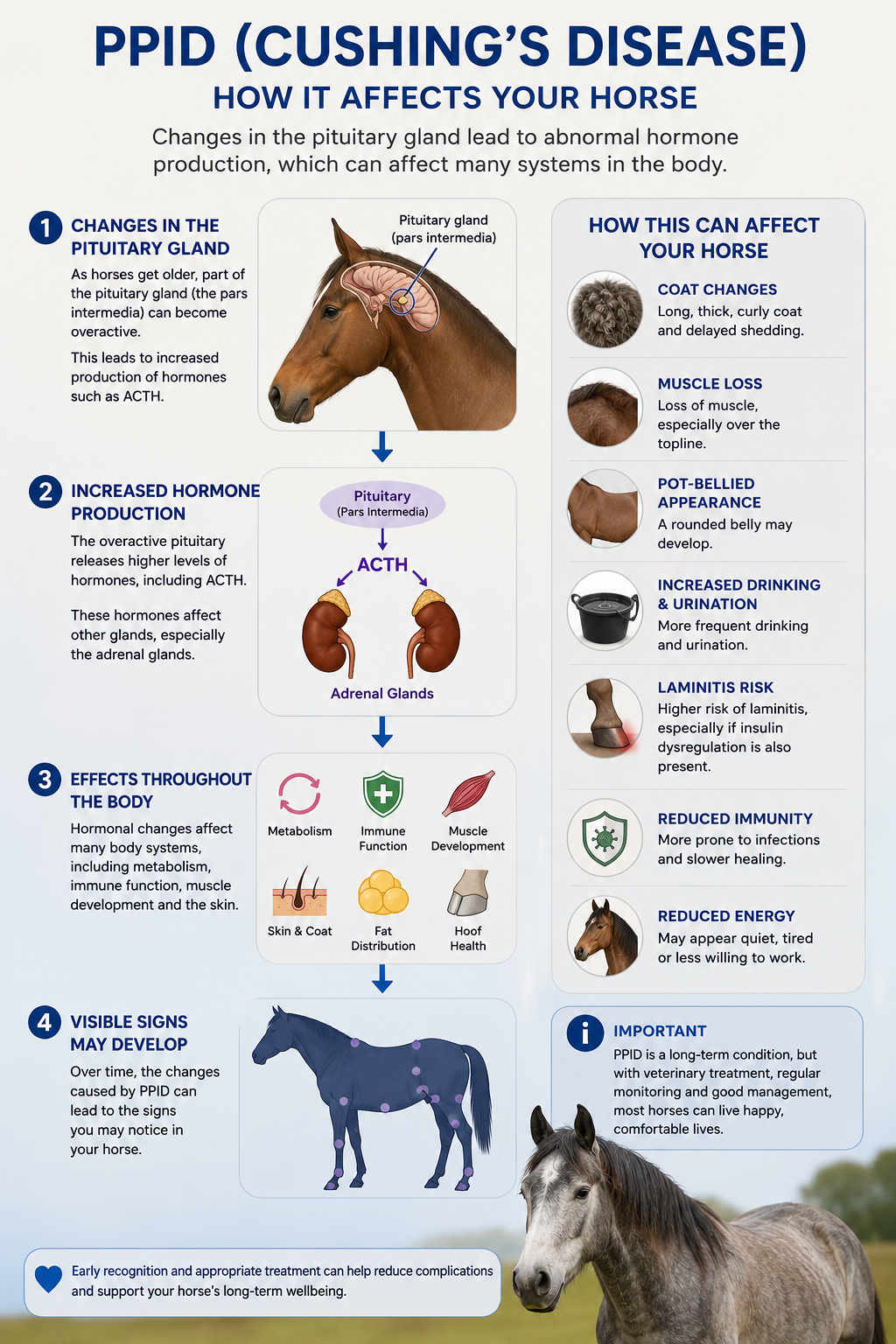
PPID stands for Pituitary Pars Intermedia Dysfunction. It is a hormonal condition involving part of the pituitary gland, which is located at the base of the horse’s brain.
The condition is commonly known as equine Cushing’s disease, although PPID is the more accurate veterinary term.
Changes within the pituitary gland lead to excessive production of certain hormones. These hormonal changes can affect the horse’s coat, muscles, metabolism, immune system and general wellbeing.
PPID is a long-term condition, but many affected horses continue to enjoy a good quality of life with appropriate veterinary treatment and day-to-day management.
👀 Signs you may notice
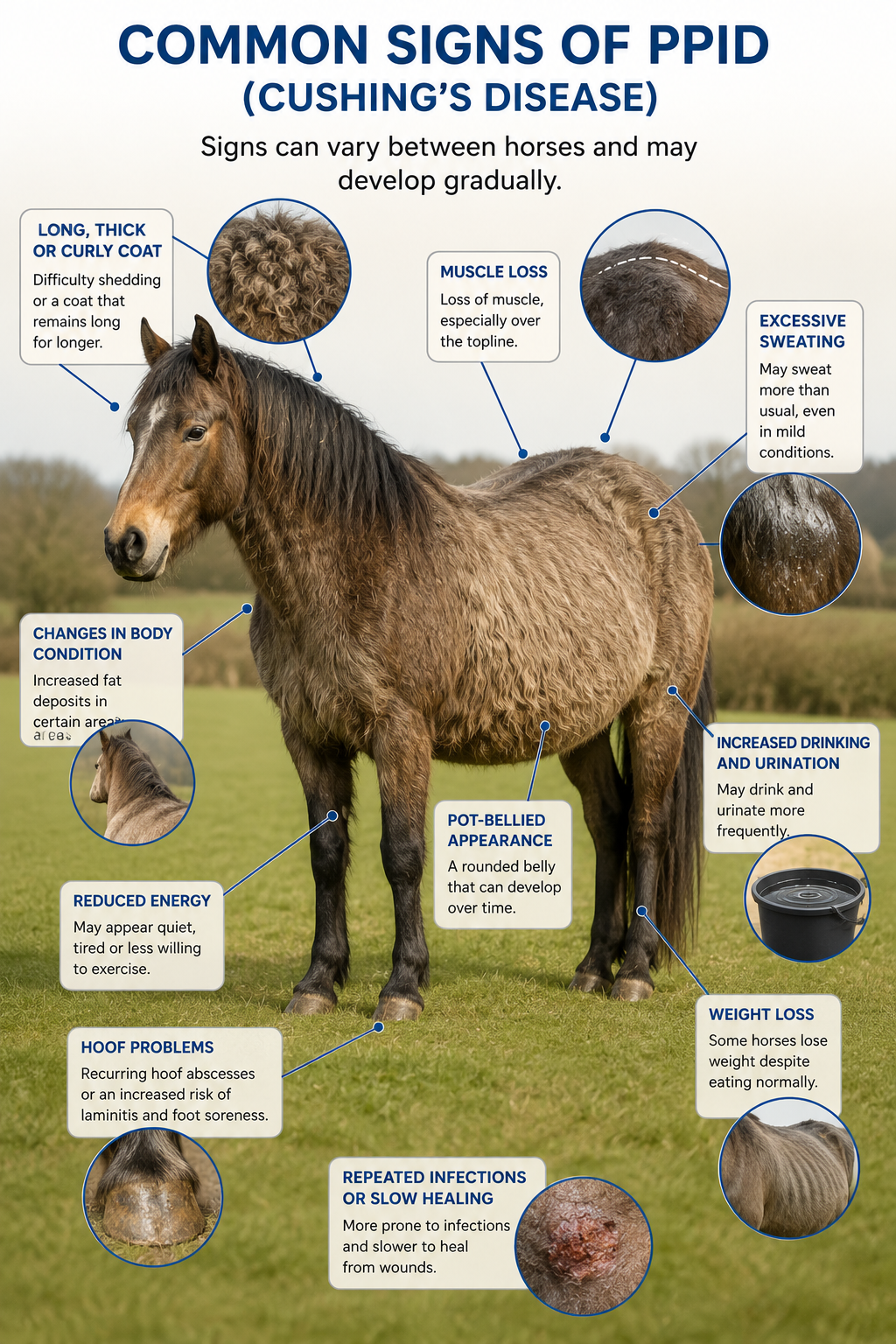
The signs of PPID can develop gradually and may vary considerably between horses.
Your horse may:
- Develop a long, thick or curly coat.
- Fail to shed its winter coat normally.
- Sweat more than usual.
- Lose muscle, particularly across the topline.
- Develop a pot-bellied appearance.
- Appear quieter or have less energy.
- Drink and urinate more frequently.
- Lose weight despite continuing to eat.
- Develop unusual areas of body fat.
- Suffer repeated infections.
- Heal more slowly following wounds or illness.
- Develop recurring hoof abscesses.
- Experience laminitis or repeated foot soreness.
A horse does not need to show all these signs to have PPID. In the early stages, changes may be mild and mistaken for normal ageing.
 tion.
tion.
🐴 Which horses are most at risk?
PPID can affect horses and ponies of any breed, size or type.
The condition is most commonly diagnosed in:
- Horses and ponies over 15 years of age.
- Older native ponies.
- Veteran leisure horses.
- Horses with recurring laminitis.
- Horses with unexplained muscle loss.
- Horses that fail to shed their coat normally.
- Horses with repeated infections or hoof abscesses.
Although PPID is more common in older animals, younger horses can occasionally be affected.
PPID should not be dismissed as a condition that only affects very elderly ponies.
🧪 How is PPID diagnosed?
PPID should be diagnosed by a veterinary surgeon.
Your vet will consider:
- Your horse’s age.
- Its medical history.
- Any previous episodes of laminitis.
- Changes in coat, weight or muscle condition.
- Increased drinking or urination.
- The results of veterinary blood tests.
Diagnosis commonly involves a blood test that measures the hormone ACTH.
ACTH levels naturally change during the year, particularly during the autumn. Results must therefore be interpreted using the appropriate seasonal laboratory ranges.
Where the result is unclear, your vet may recommend repeating the blood test or carrying out further testing.
🔄 Is PPID the same as EMS?
PPID and Equine Metabolic Syndrome, commonly shortened to EMS, are different conditions.
PPID involves age-related changes within the pituitary gland and is most frequently diagnosed in older horses.
EMS is mainly associated with insulin dysregulation, difficulty managing body weight and an increased risk of laminitis.
However, some horses can have PPID and insulin dysregulation at the same time.
Your vet may therefore recommend testing a horse with PPID for insulin dysregulation, particularly where the horse:
- Is overweight.
- Has regional fat deposits.
- Has a history of laminitis.
- Continues to gain weight easily.
- Shows signs of foot soreness.
Veterinary testing is important because PPID and EMS cannot be reliably distinguished by appearance alone.
💊 Can PPID be treated?
PPID cannot currently be cured, but it can often be successfully managed.
Veterinary treatment usually involves medication that helps control the abnormal hormone production associated with the condition.
Pergolide is the medication most commonly prescribed for horses with PPID. The dosage is determined by the veterinary surgeon and may need to be adjusted according to:
- The horse’s clinical signs.
- Its response to treatment.
- Follow-up blood-test results.
- Any suspected side effects.
Some horses may temporarily appear quieter or experience a reduction in appetite when treatment begins.
Do not stop or change prescribed medication without speaking to your veterinary surgeon. Contact your vet if you notice any concerns after treatment has started.
💡 Top Tip
Keep a simple diary recording medication, appetite, coat changes, weight, energy levels and hoof comfort. This can help you and your vet identify gradual changes more easily.
🌿 Everyday management
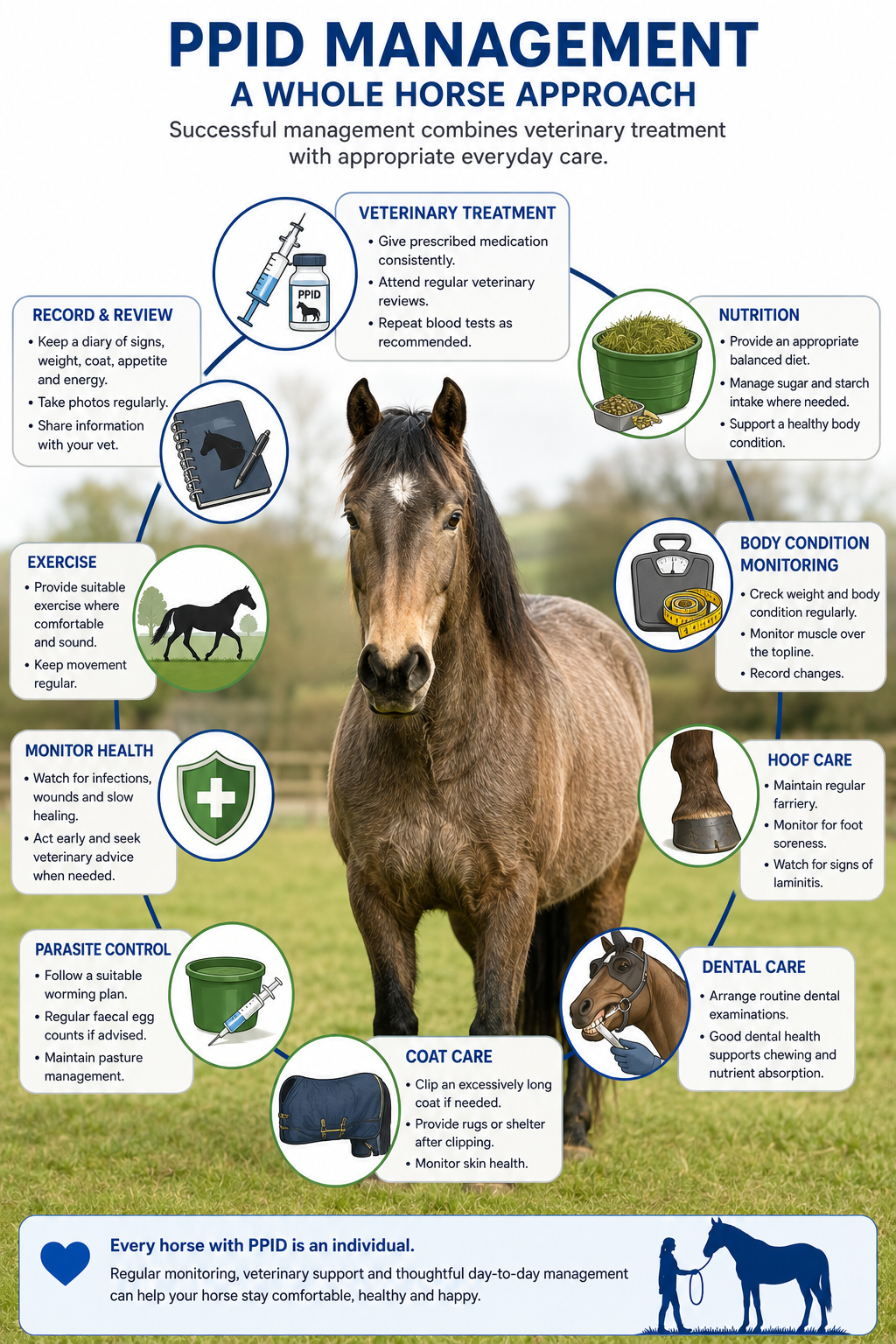
Successful PPID management usually combines veterinary treatment with appropriate everyday care.
Helpful measures may include:
- Giving prescribed medication consistently.
- Attending recommended veterinary reviews.
- Repeating blood tests when advised.
- Monitoring body weight and condition.
- Checking for muscle loss over the topline.
- Watching carefully for signs of laminitis.
- Providing regular hoof care.
- Arranging routine dental examinations.
- Following a suitable parasite-control programme.
- Clipping an excessively long coat where necessary.
- Providing additional rugs or shelter after clipping.
- Monitoring wounds and infections carefully.
- Providing suitable exercise where the horse is comfortable and sound.
Management should be based on the needs of the individual horse. Some horses with PPID remain overweight, while others struggle to maintain weight and muscle.
🥕 Feeding a horse with PPID
There is no single diet suitable for every horse with PPID.
The feeding plan should take account of:
- Current body weight and condition.
- Muscle condition.
- Dental health.
- Workload.
- Laminitis history.
- Whether insulin dysregulation is present.
- The nutritional quality of the forage.
Overweight horses or those with insulin dysregulation may require careful management of sugar, starch and grazing.
Horses that are underweight or losing muscle may need additional calories and good-quality protein from appropriate low-sugar sources.
Any restricted diet must still provide sufficient fibre, protein, vitamins and minerals.
Changes to feed or forage should be introduced gradually wherever possible.
🦶 PPID and laminitis
PPID can increase the risk of laminitis, particularly where insulin dysregulation is also present.
In some horses, laminitis may be the first obvious indication of an underlying hormonal condition.
Signs to watch for include:
- A shortened or pottery stride.
- Reluctance to walk forward.
- Difficulty turning tightly.
- Shifting weight between the feet.
- Unusually warm feet.
- A stronger than normal digital pulse.
- Repeated or unexplained foot soreness.
- A rocked-back stance.
If you suspect laminitis, contact your veterinary surgeon immediately.
🚨 Veterinary Emergency
Laminitis should always be treated as a veterinary emergency.
If your horse with PPID develops signs of laminitis, contact your veterinary surgeon immediately.
📋 Monitoring your horse
Regular monitoring can help identify whether veterinary treatment and daily management are working effectively.
Owners may find it helpful to monitor:
- Body weight or weight-tape measurements.
- Body-condition score.
- Muscle condition over the topline.
- Coat growth and shedding.
- Appetite.
- Water intake and urination.
- Energy levels and behaviour.
- Hoof comfort and digital pulses.
- Wounds, infections or hoof abscesses.
- Medication and any dosage changes.
- Veterinary blood-test results.
Taking photographs from the same angles every few weeks can make gradual changes easier to recognise.
🚨 When should you contact your vet?
Contact your veterinary surgeon if your horse:
- Develops a long or unusual coat.
- Fails to shed normally.
- Loses weight or muscle unexpectedly.
- Drinks or urinates more frequently.
- Develops repeated infections.
- Has recurring hoof abscesses.
- Shows unexplained foot soreness.
- Appears quieter or less active than usual.
- Experiences a significant reduction in appetite.
- Shows a change after beginning medication.
Seek urgent veterinary advice if your horse shows signs of laminitis, sudden deterioration or significant discomfort.
Early diagnosis and appropriate treatment can help reduce the risk of complications and support the horse’s long-term quality of life.
🌿 Nutritional support
Nutrition can form an important part of a wider PPID management programme alongside veterinary treatment and appropriate everyday care.
Depending on your horse’s individual requirements, owners may wish to consider:
- Managing sugar and starch intake where appropriate.
- Providing suitable fibre sources.
- Supporting a healthy body condition.
- Providing sufficient good-quality protein.
- Supporting normal metabolic function.
- Ensuring a balanced intake of vitamins and minerals.
The nutritional needs of an overweight horse with PPID may be very different from those of an older horse struggling to maintain weight and muscle.
Nutritional supplements are not a substitute for veterinary diagnosis, prescribed medication or appropriate management, but may form part of a wider support programme.
❓ Common Questions
Can PPID be cured?
PPID cannot currently be cured. Treatment and management are usually lifelong, but many affected horses continue to enjoy comfortable and active lives.
Is PPID only found in very old ponies?
No. It is most common in older horses and ponies, but it can affect animals of different breeds, sizes and types.
Does every horse with PPID have a curly coat?
No. Coat changes are common, but some horses show much more subtle signs, particularly during the early stages.
Will a horse with PPID develop laminitis?
Not every horse with PPID develops laminitis, but the risk can be increased, particularly where insulin dysregulation is also present.
Can horses with PPID still be ridden?
Many can continue appropriate work where they are comfortable, sound and otherwise well. Exercise should be based on the horse’s individual condition and veterinary advice.
Does a horse with PPID need a low-sugar diet?
This depends on the individual horse, its body condition, laminitis risk and whether insulin dysregulation is present. Seek veterinary or suitably qualified nutritional advice.
🧴 FreeStep Products that may help support your horse
FreeStep has developed several nutritional products that owners commonly choose as part of a wider veterinary and management programme.
✓ FreeStep No Quibble Money-Back Guarantee
Every FreeStep product is covered by the FreeStep No Quibble Money-Back Guarantee, giving horse owners the confidence to try the most appropriate nutritional support for their horse.
Provides additional nutritional support for normal metabolic function and healthy weight management, including for horses with PPID (Cushing’s disease).
Suitable for horses requiring ongoing nutritional support for normal metabolic function and weight management, including those with PPID.
Helps provide a broad spectrum of naturally derived minerals to complement forage-based diets.
Always select supplements appropriate to your horse’s individual requirements and seek professional advice where necessary.
🔗 Related Health Topics
You may also find these pages helpful:
- Equine Metabolic Syndrome (EMS)
- Laminitis
- Weight Management
- Hoof Health
📘 Learn More
For a more detailed explanation covering:
- How PPID affects the pituitary gland
- Early and advanced signs of PPID
- Veterinary testing and diagnosis
- Medication and monitoring
- PPID and insulin dysregulation
- Laminitis risk
- Feeding and weight management
- Managing older horses with PPID
- Frequently Asked Questions
- Nutritional support in more detail
A detailed PPID Management Guide will be added here.
ℹ️ Disclaimer
The information on this page is intended for educational purposes only and should not replace professional veterinary advice, diagnosis or prescribed treatment.
If you are concerned that your horse may have PPID or is showing signs of laminitis, contact your veterinary surgeon.