
Nutritional & Product Support
LamiAlert
LamiAlert CSH
Supplements are not medicines and do not treat or cure medical conditions. Where appropriate, they may form part of a wider nutritional and management programme.
Laminitis
Helping Horse Owners Understand and Manage Laminitis
Supporting horse owners with practical information and nutritional support.
This conditions page will tell you about the condition but our User Guide, which can be downloaded, provides much more in depth management knowledge.
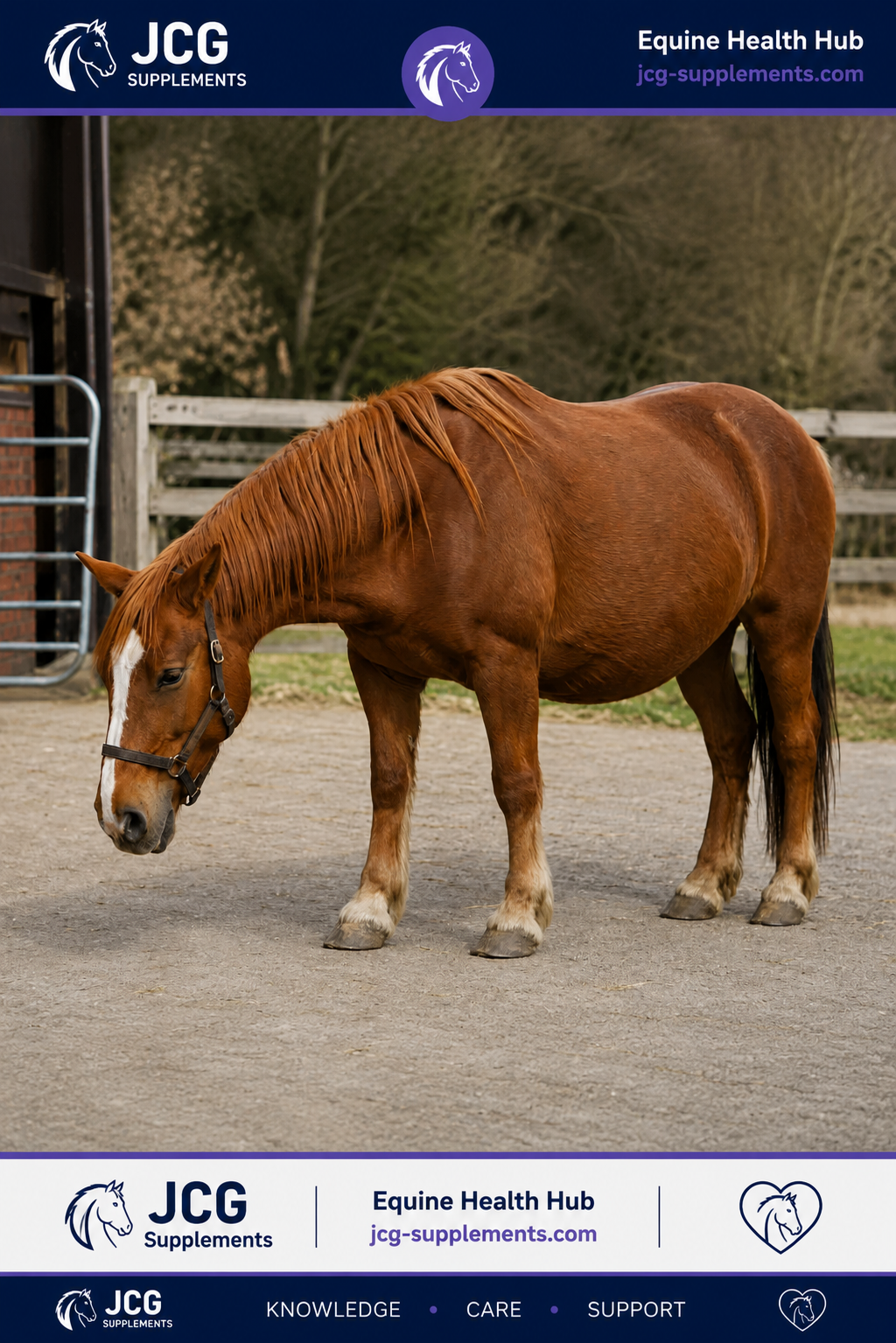
⚡ Quick Facts
- Can affect any horse or pony.
- Most common in overweight horses and good doers.
- Often linked with EMS or PPID.
- Veterinary emergency if suspected.
- Early action greatly improves outcomes.
🩺 What is laminitis?
Laminitis is a painful condition affecting the sensitive tissues, called laminae, that attach the hoof wall to the pedal bone within the hoof. These tissues support the horse’s weight and help keep the pedal bone securely in place.
When the laminae become damaged or inflamed, they can weaken. In severe cases, the pedal bone may rotate or sink within the hoof, making laminitis a potentially life-threatening condition requiring immediate veterinary attention.
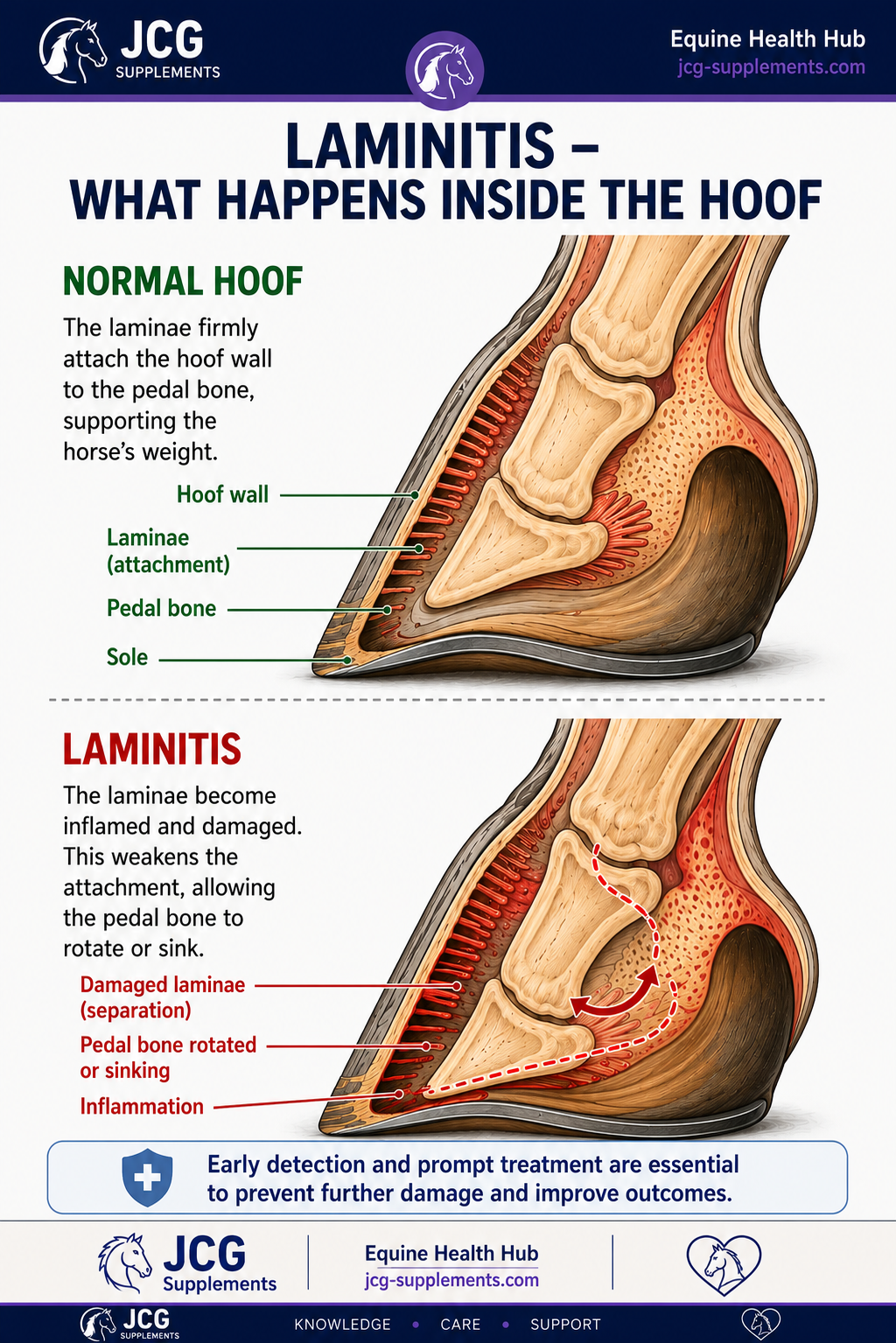
Although laminitis is often associated with rich grass, it can develop for several different reasons, including metabolic disorders such as Equine Metabolic Syndrome (EMS) and PPID (Cushing’s disease), excessive sugar intake, obesity, concussion, severe illness and other underlying health problems.
Early recognition and prompt management can make a significant difference to the outcome.
👀 Signs you may notice
Your horse may:
- Walk reluctantly or appear stiff.
- Be unwilling to turn tightly.
- Shift weight from one foot to another.
- Lean back to relieve pressure on the front feet.
- Have warm feet.
- Have a stronger than normal digital pulse.
- Become uncomfortable on hard ground.
- Spend more time lying down.
- Develop recurring foot soreness.
- Become reluctant to exercise.
If your horse suddenly becomes very lame or you suspect laminitis, contact your veterinary surgeon immediately.
🧬 Common causes
Laminitis is often linked to one or more of the following:
- Excess sugar and starch intake.
- Rapid grass growth during spring or autumn.
- Obesity.
- Equine Metabolic Syndrome (EMS).
- PPID (Cushing’s disease).
- Severe systemic illness.
- Concussion on hard surfaces.
- Retained placenta after foaling.
- High carbohydrate feeds.
Many horses develop laminitis because several of these factors occur together.
🐴 Which horses are most at risk?
Laminitis can affect any horse or pony, but the risk is increased in:
- Native breeds.
- Good doers.
- Overweight horses.
- Older horses.
- Horses diagnosed with EMS.
- Horses with PPID.
- Horses with a previous history of laminitis.
- Horses with unrestricted grazing on rich pasture.
🛡️ Can laminitis be prevented?
Many cases can be reduced through good management.
Helpful measures include:
- Maintaining a healthy body condition.
- Restricting sugar intake where appropriate.
- Managing grazing carefully.
- Introducing dietary changes gradually.
- Exercising appropriately where advised by your vet.
- Monitoring weight regularly.
- Seeking veterinary advice if your horse shows signs of EMS or PPID.
Prevention focuses on reducing risk rather than eliminating it entirely.
💡 Top Tip
Regularly checking your horse’s body condition score and monitoring weight can help identify problems before they become serious.
🚨 When should you contact your vet?
Contact your veterinary surgeon immediately if your horse:
- Suddenly becomes lame.
- Adopts a “rocked back” stance.
- Has a strong digital pulse.
- Has unusually warm feet.
- Is reluctant to walk.
- Appears to be in significant pain.
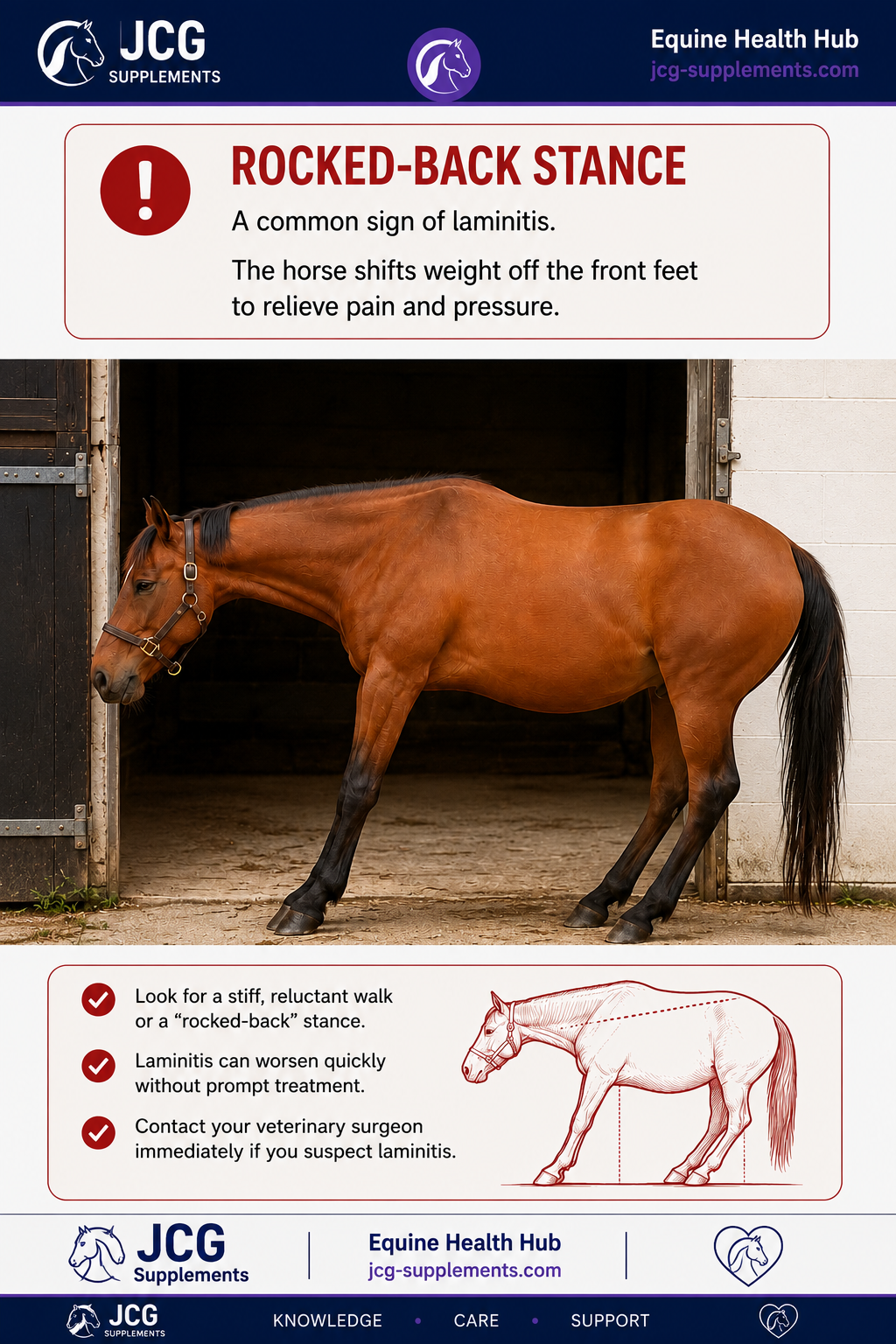
🚨 Veterinary Emergency
Laminitis should always be treated as a veterinary emergency.
If you suspect your horse has laminitis, contact your veterinary surgeon immediately.
🌿 Nutritional support
Nutrition plays an important role alongside veterinary treatment and good management.
Depending on your horse’s individual needs, owners may wish to consider:
- Managing sugar intake.
- Providing appropriate fibre sources.
- Supporting healthy weight management.
- Maintaining normal metabolic function.
- Ensuring a balanced intake of vitamins and minerals.
Nutritional supplements are not a substitute for veterinary diagnosis or treatment but may form part of a wider management plan.
❓ Common Questions
Can laminitis be cured?
Management is usually lifelong, but many horses live comfortable, active lives with appropriate veterinary care, nutrition and management.
Can horses with laminitis still go out on grass?
Some can, depending on the cause and veterinary advice, but grazing often needs careful management.
Will my horse get laminitis again?
Previous laminitis increases future risk, making ongoing management especially important.
🧴 FreeStep Products that may help support your horse
FreeStep has developed several nutritional products that owners commonly choose as part of a wider veterinary and management programme.
✓ FreeStep No Quibble Money-Back Guarantee
Every FreeStep product is covered by the FreeStep No Quibble Money-Back Guarantee, giving horse owners the confidence to try the most appropriate nutritional support for their horse.
Designed to support normal metabolic function and healthy weight management in horses and ponies prone to metabolic challenges.
Provides additional nutritional support for horses requiring metabolic support, including those with PPID (Cushing’s disease).
Suitable for horses requiring ongoing nutritional support for normal metabolic function and weight management.
Helps provide a broad spectrum of naturally derived minerals to complement forage-based diets.
Always select supplements appropriate to your horse’s individual requirements and seek professional advice where necessary.
🔗 Related Health Topics
You may also find these pages helpful:
- Equine Metabolic Syndrome (EMS)
- PPID (Cushing’s Disease)
- Weight Management
- Hoof Health
📘 Learn More
For a more detailed explanation covering:
- What actually happens inside the hoof
- Different causes of laminitis
- EMS and PPID explained
- Grazing management
- Feeding advice
- Weight management
- Recovery expectations
- Frequently Asked Questions
- Nutritional support in more detail
ℹ️ Disclaimer
The information on this page is intended for educational purposes only and should not replace professional veterinary advice.
If you suspect your horse has laminitis, contact your veterinary surgeon immediately.