
Nutritional & Product Support
Supplements are not medicines and do not treat or cure medical conditions. Where appropriate, they may form part of a wider nutritional and management programme.
Joint Mobility & Stiffness
Helping Horse Owners Understand and Manage Joint Stiffness
Supporting horse owners with practical information and nutritional support.
⚡ Quick Facts
- Joint stiffness can affect horses of any age.
- It is especially common in older horses and those in regular work.
- Early signs may be subtle and easy to miss.
- Good management can help support comfort and mobility.
- Sudden or severe lameness should always be checked by a vet.
🩺 What is joint mobility and stiffness?
Joint mobility refers to how freely and comfortably a horse can move through its joints. Good mobility allows the horse to walk, turn, bend, stretch, work and exercise without obvious restriction or discomfort.
Joint stiffness is usually noticed when movement becomes less free. Your horse may take longer to loosen up, appear less willing to bend, struggle on tight circles, or seem more uncomfortable after rest, hard work, cold weather or travelling.
Stiffness does not always mean there is a serious problem, but it should not be ignored. It can be linked to age, workload, previous injury, joint wear and tear, poor foot balance, reduced fitness, management changes or underlying discomfort.
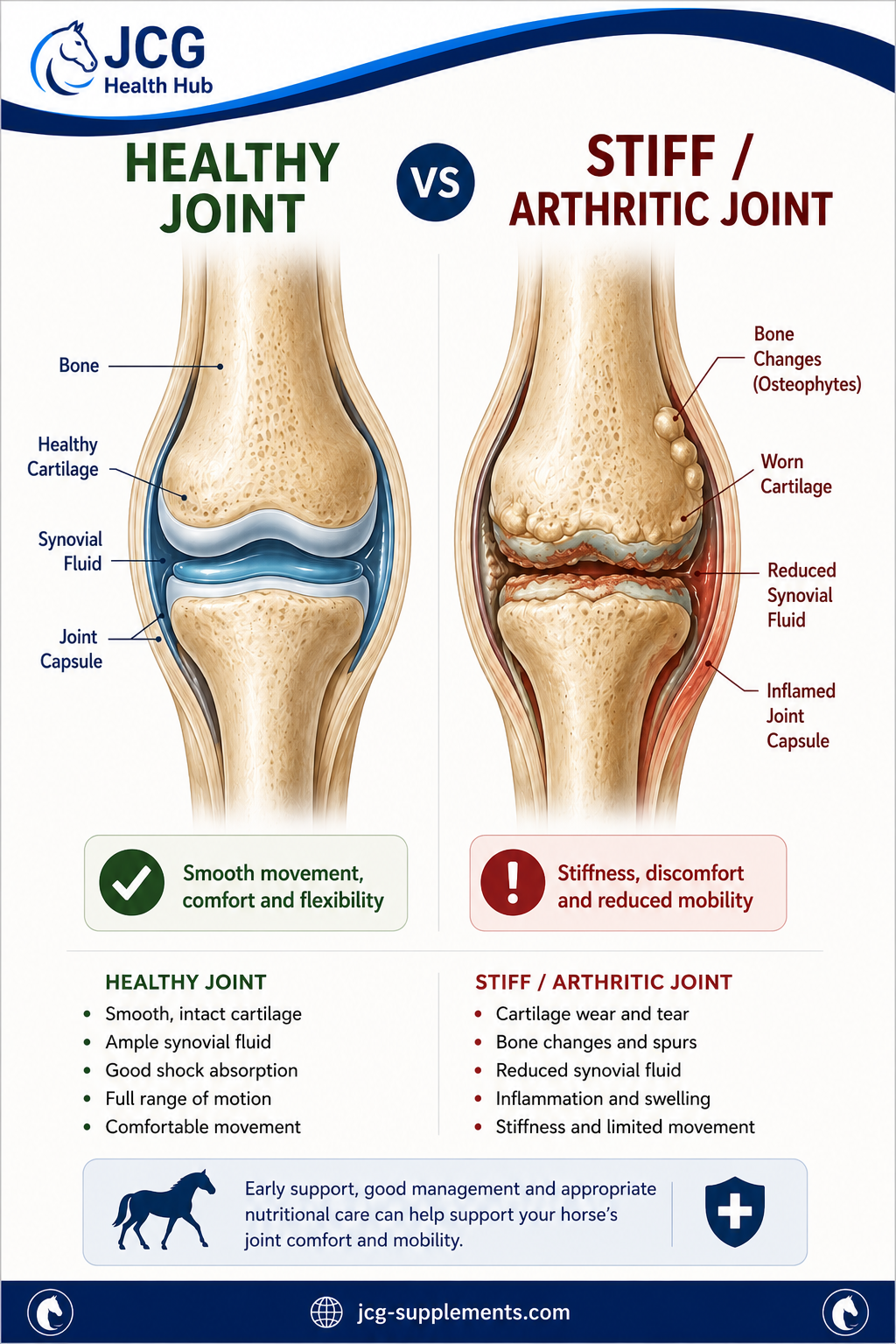
Early recognition and sensible management can help support comfort, movement and quality of life.
👀 Signs you may notice
Your horse may:
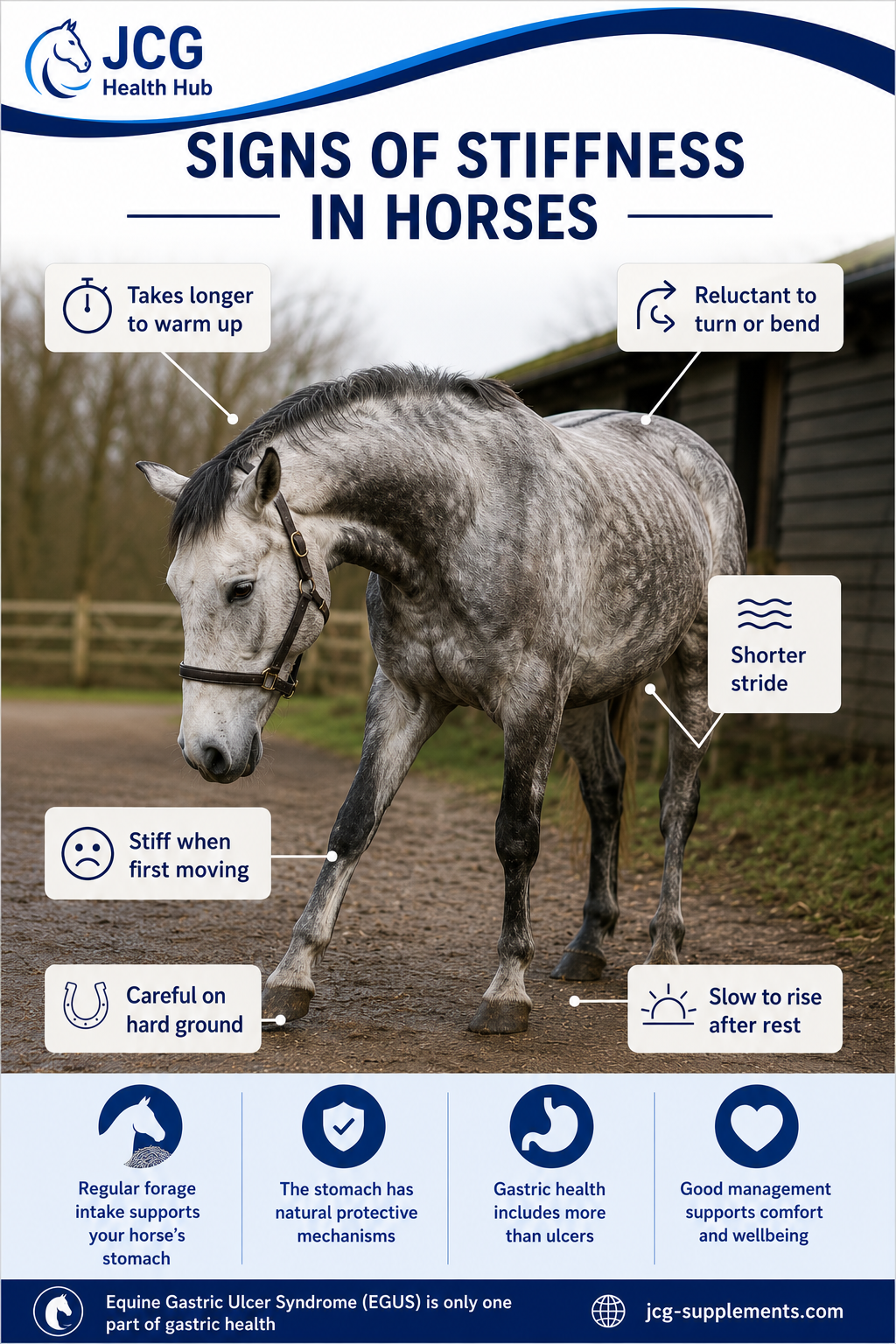
- Feel stiff when first coming out of the stable.
- Take longer to warm up during exercise.
- Appear short-striding or less free in movement.
- Be reluctant to work on circles or tight turns.
- Struggle more on hard or uneven ground.
- Find transitions more difficult.
- Show reduced enthusiasm for exercise.
- Be less willing to stretch, bend or work in an outline.
- Become slower to rise after lying down.
- Show stiffness after travelling or standing for long periods.
- Appear uncomfortable in cold or wet weather.
If your horse suddenly becomes lame, shows clear pain, or the stiffness is getting worse, contact your veterinary surgeon.
🧬 Common causes
Joint stiffness may be linked to one or more of the following:
- Age-related joint wear and tear.
- Previous injury or strain.
- Regular or demanding work.
- Poor foot balance or inappropriate shoeing.
- Reduced fitness or muscle weakness.
- Long periods of stabling or restricted movement.
- Cold, wet or changeable weather.
- Hard ground or uneven surfaces.
- Excess body weight placing extra strain on joints.
- Underlying lameness or veterinary conditions.
Many horses become stiff because several small factors occur together.
🐴 Which horses are most at risk?
Joint stiffness can affect any horse or pony, but the risk is increased in:
- Older horses and veterans.
- Competition horses.
- Horses in regular work.
- Horses returning to work after time off.
- Horses with previous joint, tendon or ligament issues.
- Overweight horses.
- Horses with poor foot balance.
- Horses kept stabled for long periods.
- Horses working on hard or uneven ground.
🛡️ Can stiffness be prevented?
Not all stiffness can be prevented, but good management can help reduce strain and support long-term mobility.
Helpful measures include:
- Maintaining a healthy body condition.
- Keeping your horse moving regularly where appropriate.
- Using a sensible warm-up and cool-down routine.
- Managing workload gradually.
- Avoiding sudden increases in exercise intensity.
- Maintaining regular farriery and good foot balance.
- Providing suitable turnout where possible.
- Using appropriate bedding and stable management.
- Seeking veterinary advice if stiffness becomes persistent or uneven.
Prevention focuses on reducing joint strain and supporting comfortable movement.
💡 Top Tip
If your horse feels stiff when first coming out of the stable but loosens up after a few minutes, make a note of it. Gradual changes over time are often easier to spot when you keep a simple diary.
🚨 When should you contact your vet?
Contact your veterinary surgeon if your horse:
- Suddenly becomes lame.
- Shows stiffness that is getting worse.
- Is noticeably uneven on one rein or one leg.
- Shows swelling, heat or pain around a joint.
- Becomes reluctant to move forward.
- Struggles to get up after lying down.
- Shows a clear change in behaviour when ridden or handled.
- Does not improve with sensible management.
🚨 Veterinary Advice
Persistent stiffness, sudden lameness or obvious discomfort should always be discussed with your veterinary surgeon.
If your horse appears lame or in pain, contact your veterinary surgeon for advice.
🌿 Nutritional support
Nutrition can play a helpful role alongside veterinary advice, correct management, appropriate exercise and good farriery.
Depending on your horse’s individual needs, owners may wish to consider:
- Supporting normal joint comfort and mobility.
- Maintaining healthy soft tissues.
- Supporting horses in regular work.
- Helping older horses remain comfortable and active.
- Providing appropriate nutritional support during periods of stiffness.
- Maintaining a healthy body weight to reduce strain on joints.
Nutritional supplements are not a substitute for veterinary diagnosis or treatment but may form part of a wider management plan.
❓ Common Questions
Is stiffness just part of getting older?
Older horses are more likely to become stiff, but stiffness should not simply be dismissed as old age. Many horses can remain comfortable and active with suitable management.
Should I exercise a stiff horse?
This depends on the cause. Gentle, regular movement can help some horses, but sudden lameness, pain or worsening stiffness should be checked by a vet first.
Can supplements cure joint problems?
No. Supplements do not cure joint disease, but appropriate nutritional support may help form part of a wider comfort and mobility management plan.
🧴 FreeStep Products that may help support your horse
FreeStep has developed several nutritional products that owners commonly choose as part of a wider veterinary and management programme.
✓ FreeStep No Quibble Money-Back Guarantee
Every FreeStep product is covered by the FreeStep No Quibble Money-Back Guarantee, giving horse owners the confidence to try the most appropriate nutritional support for their horse.
A no-bute joint supplement suitable for horses needing everyday support for joints, muscles, backs and feet.
Designed for horses in harder work or competition where ongoing mobility and performance support may be required.
Provides nutritional support for horses needing additional comfort and wellbeing support.
A single-ingredient herbal option often chosen by owners looking to support comfort and mobility.
A simple herbal product traditionally used to support circulation, comfort and general wellbeing.
A single-ingredient option often selected where soft tissue comfort and natural recovery support are required.
Always select supplements appropriate to your horse’s individual requirements and seek professional advice where necessary.
🔗 Related Health Topics
You may also find these pages helpful:
- Older Horse Support
- Back and Muscle Comfort
- Performance Horse Support
- Hoof Balance and Movement
- Weight Management
📘 Learn More
For a more detailed explanation covering:
- Why horses become stiff
- How joints change over time
- Early warning signs
- Exercise and turnout management
- Older horse mobility
- When to seek veterinary advice
- Feeding and weight management
- Frequently Asked Questions
- Nutritional support in more detail
ℹ️ Disclaimer
The information on this page is intended for educational purposes only and should not replace professional veterinary advice.
If your horse is lame, uncomfortable or showing worsening stiffness, contact your veterinary surgeon for advice.