
Nutritional & Product Support
LamiAlert
Supplements are not medicines and do not treat or cure medical conditions. Where appropriate, they may form part of a wider nutritional and management programme.
Equine Metabolic Syndrome (EMS)
Helping Horse Owners Understand and Manage Equine Metabolic Syndrome
Supporting horse owners with practical information and nutritional support.
⚡ Quick Facts
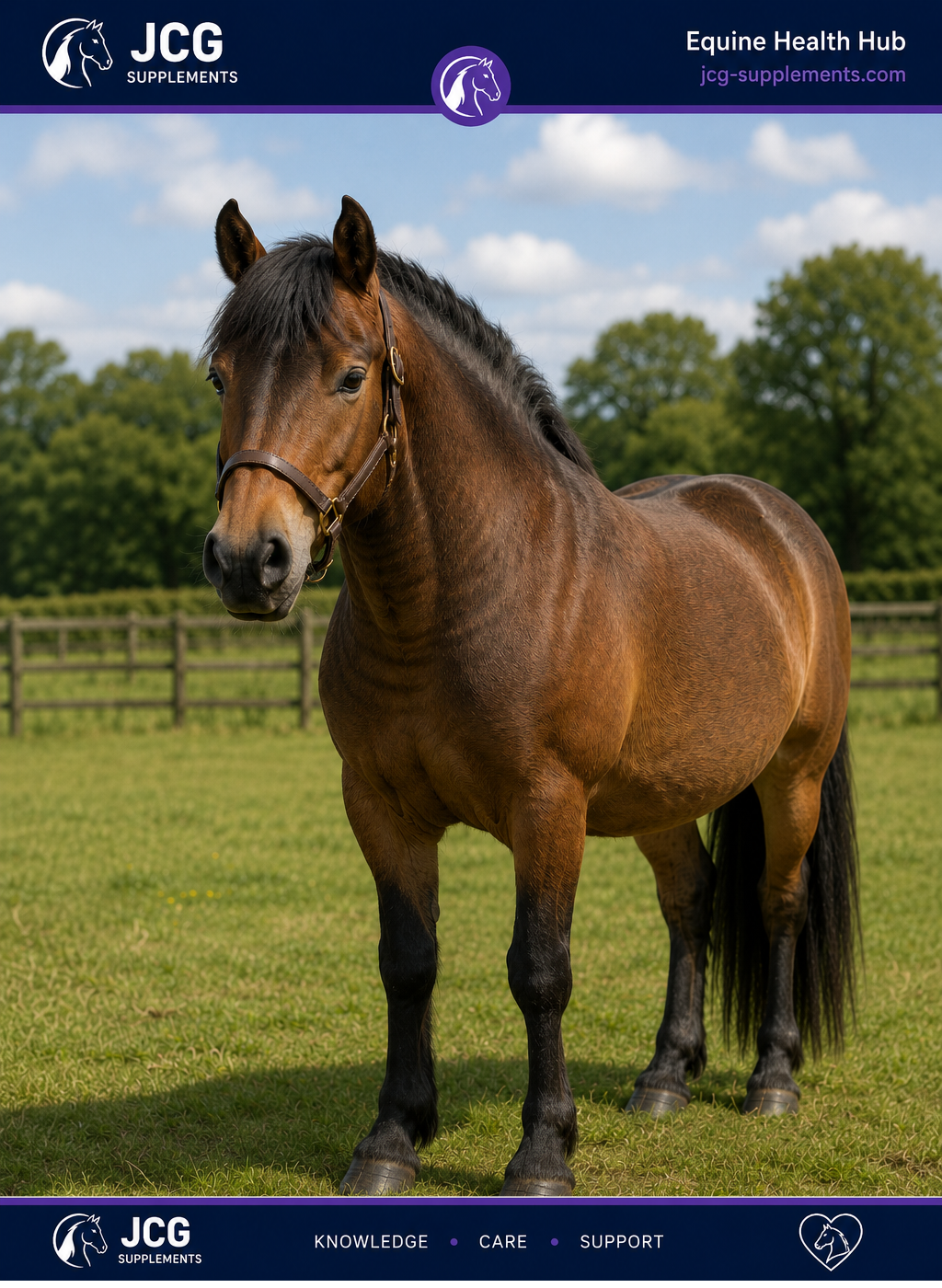
- EMS affects the way a horse or pony responds to insulin.
- It is strongly associated with an increased risk of laminitis.
- It is commonly seen in native breeds, ponies, cobs and good doers.
- Not every horse with EMS is visibly overweight.
- Weight, diet, grazing and exercise usually require careful management.
🩺 What is Equine Metabolic Syndrome?
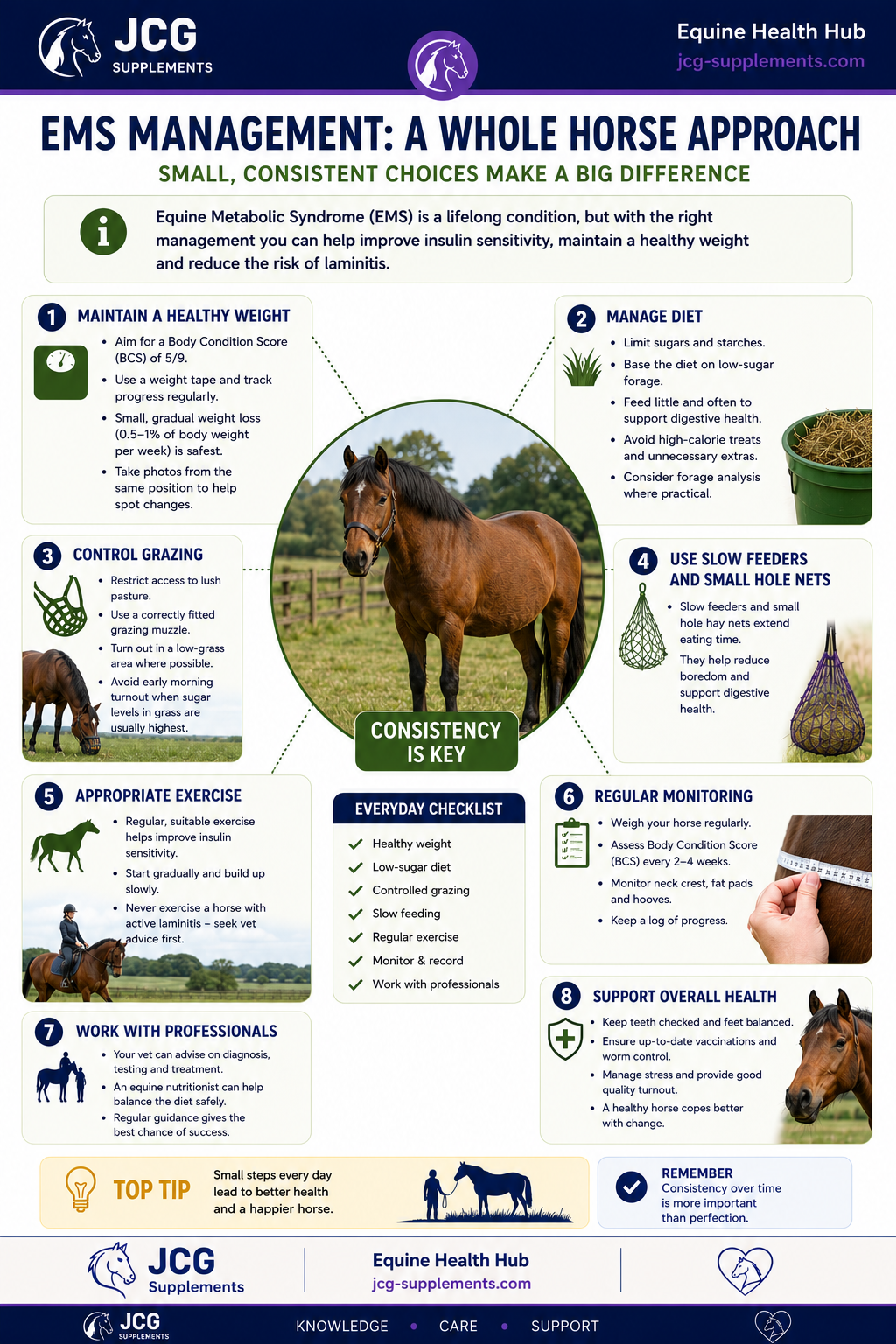
Equine Metabolic Syndrome, commonly shortened to EMS, is a metabolic condition in which a horse or pony has an abnormal response to insulin. This is known as insulin dysregulation.
Insulin is a hormone that helps the body manage glucose released from food. In horses with insulin dysregulation, the body may produce an excessive insulin response after consuming feeds or forage containing sugar and starch.
Persistently high insulin levels can increase the risk of laminitis, which is the most serious concern associated with EMS.
EMS is often linked with excess weight or abnormal fat deposits. However, some affected horses maintain a relatively normal overall body condition while still showing signs such as a cresty neck or fat deposits around particular areas of the body.
👀 Signs you may notice
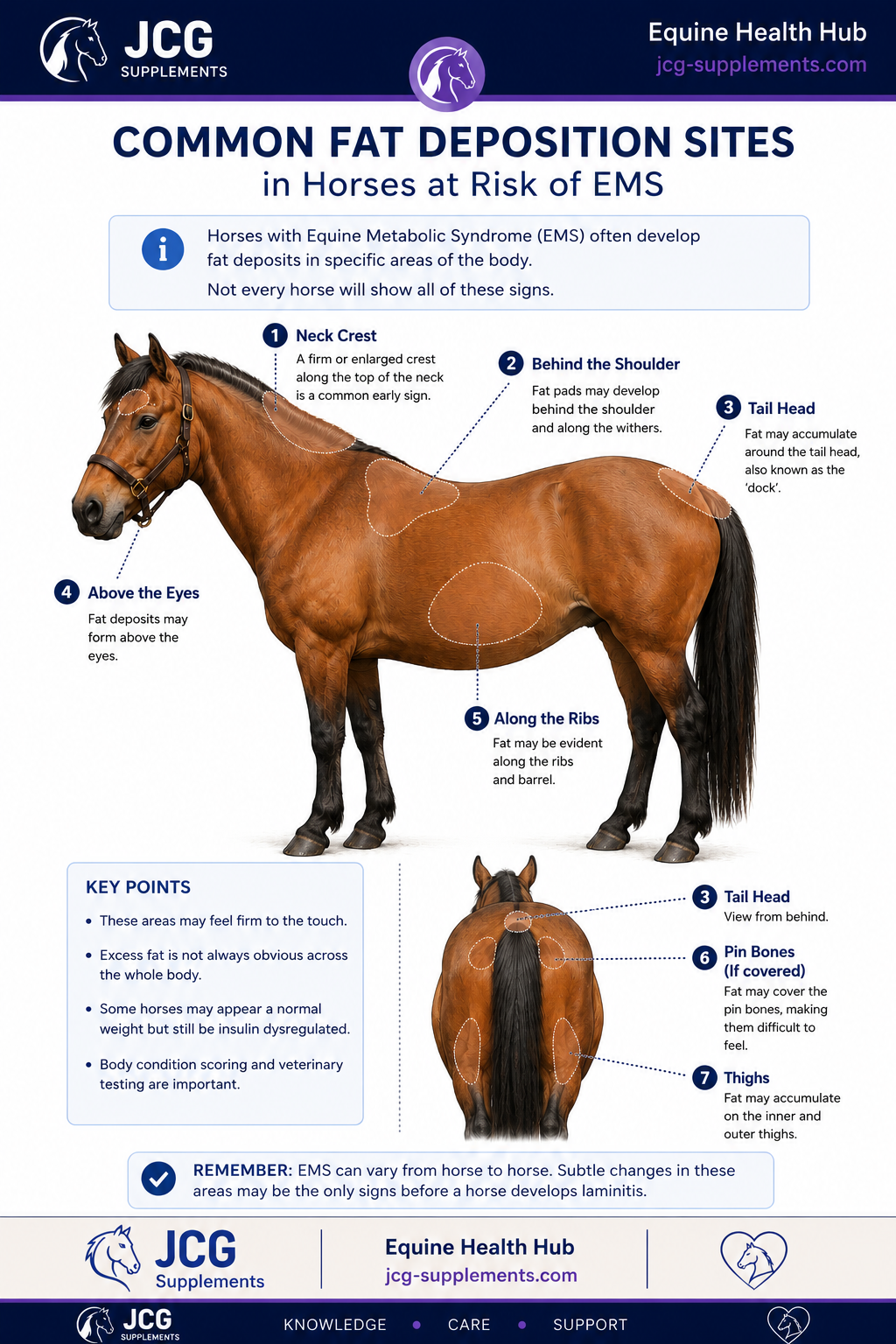
A horse or pony with EMS may:
- Gain weight easily.
- Be difficult to slim down.
- Develop a firm or enlarged neck crest.
- Develop fat pads behind the shoulders.
- Carry abnormal fat around the tail head.
- Develop fat deposits above the eyes.
- Become foot sore after grazing.
- Experience repeated or unexplained episodes of laminitis.
- Show visible growth rings or changes in the hoof wall.
- Appear reluctant to move comfortably on firm ground.
Not every horse with EMS will show all these signs. Some horses may appear to be a healthy weight but still have insulin dysregulation.
🧬 Common contributing factors
EMS is usually associated with a combination of inherited susceptibility, diet, body condition and lifestyle.
Contributing factors may include:
- A natural tendency to gain weight easily.
- Excess calorie intake.
- High-sugar or high-starch diets.
- Unrestricted access to rich pasture.
- Obesity or regional fat deposits.
- Limited exercise.
- Breed or genetic predisposition.
- A previous history of laminitis.
EMS does not develop simply because a horse has eaten one rich meal. It usually reflects a longer-term combination of metabolic susceptibility and management factors.
🐴 Which horses are most at risk?
EMS can affect a range of horses and ponies, but it is more commonly recognised in:
- Native ponies.
- Cobs.
- Good doers and easy keepers.
- Horses and ponies that gain weight easily.
- Animals with a prominent or firm neck crest.
- Horses with limited exercise.
- Horses and ponies with a previous history of laminitis.
- Animals with unrestricted access to calorie-rich grazing.
Although excess weight is an important warning sign, EMS should not be ruled out simply because a horse does not appear obviously overweight.
🔬 How is EMS diagnosed?
EMS should be diagnosed by a veterinary surgeon.
Your vet may consider:
- Your horse’s medical and laminitis history.
- Overall body condition.
- The presence of a cresty neck or regional fat deposits.
- Diet, grazing and exercise levels.
- Blood testing to assess the horse’s insulin response.
- Further testing where resting blood results are unclear.
- Testing for PPID where age or clinical signs make this appropriate.
A single normal insulin result does not always rule out insulin dysregulation. Your veterinary surgeon will select and interpret the most appropriate tests for the individual horse.
🛡️ Can EMS be managed?
EMS can often be managed successfully, although long-term changes may be needed.
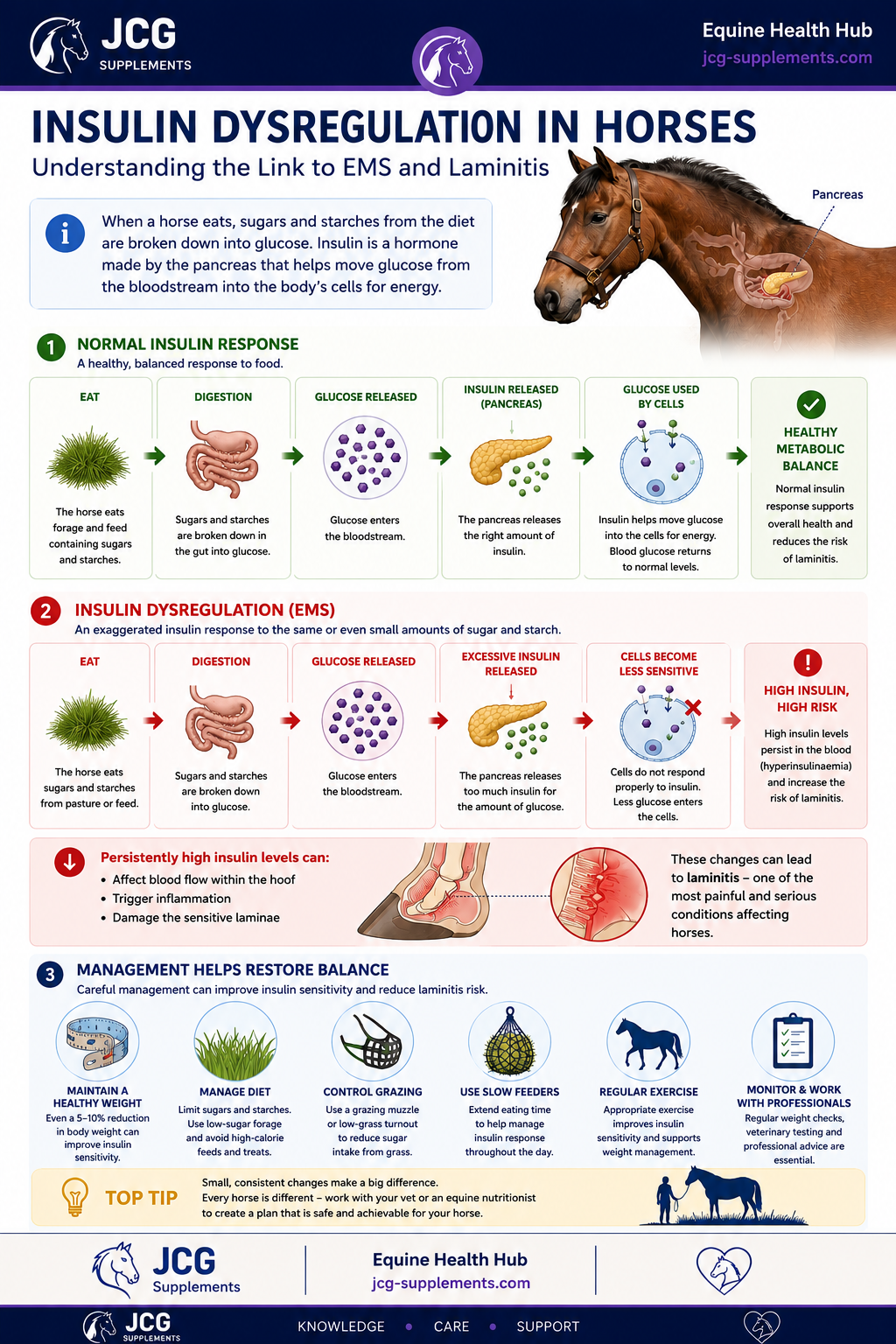
Management usually focuses on:
- Achieving and maintaining a healthy body condition.
- Reducing excess calorie intake where appropriate.
- Managing sugar and starch intake.
- Controlling access to pasture.
- Providing suitable forage as the main part of the diet.
- Using slow feeders or other methods to extend forage eating time.
- Introducing appropriate exercise when the horse is sound.
- Monitoring weight and body condition regularly.
- Working with a veterinary surgeon and, where appropriate, an equine nutritionist.
Exercise may help improve insulin regulation and support weight management, but it should not be started or increased when a horse has active laminitis or is uncomfortable. Veterinary advice should be obtained first.
💡 Top Tip
Use a weight tape and take regular photographs from the same position. Gradual changes in weight, neck crest and body shape can be difficult to notice when you see your horse every day.
🌱 Grazing and forage management
Pasture can be difficult to manage because its sugar and calorie content changes according to the weather, season, grass type and growing conditions.
Depending on the individual horse, management may include:
- Restricting grazing access.
- Using a correctly fitted grazing muzzle.
- Providing turnout in a suitable low-grass area.
- Having forage analysed where practical.
- Soaking hay where recommended by a veterinary surgeon or nutritionist.
- Weighing forage rather than estimating it by eye.
- Using small-holed nets or slow feeders to extend eating time.
- Avoiding sudden dietary restrictions or prolonged periods without forage.
Any weight-loss programme should be introduced carefully. Severe feed restriction can cause additional health and welfare problems, so seek professional advice before making major dietary changes.
🚨 When should you contact your vet?
Contact your veterinary surgeon if your horse:
- Develops a firm or enlarged neck crest.
- Continues gaining weight despite dietary changes.
- Is repeatedly foot sore after grazing.
- Has a previous history of unexplained laminitis.
- Develops unusual fat deposits.
- Is difficult to manage despite a controlled diet.
- Shows signs that could indicate PPID as well as EMS.
Contact your veterinary surgeon immediately if your horse:
- Suddenly becomes lame.
- Is reluctant to walk or turn.
- Develops warm feet or a strong digital pulse.
- Shifts weight repeatedly between its feet.
- Adopts a rocked-back stance.
- Shows any other signs of suspected laminitis.
🚨 Veterinary Emergency
EMS greatly increases the risk of laminitis, and laminitis should always be treated as a veterinary emergency.
If you suspect your horse has laminitis, contact your veterinary surgeon immediately.
🌿 Nutritional support
Nutrition forms an important part of EMS management alongside veterinary guidance, appropriate exercise and careful grazing control.
Depending on your horse’s individual requirements, management may focus on:
- Controlling overall calorie intake.
- Managing dietary sugar and starch.
- Providing suitable fibre-based forage.
- Supporting gradual and controlled weight management.
- Maintaining normal metabolic function.
- Balancing vitamins and minerals without providing unnecessary calories.
Nutritional supplements cannot treat or cure EMS and should not replace veterinary diagnosis, dietary management or appropriate exercise. They may, however, form part of a wider management programme.
❓ Common Questions
Is EMS the same as laminitis?
No. EMS is a metabolic condition that increases the risk of laminitis. Laminitis is a painful condition affecting the sensitive supporting tissues within the hoof.
Is EMS the same as PPID or Cushing’s disease?
No. EMS and PPID are different conditions, although both can be associated with insulin dysregulation and laminitis. Some horses may have both conditions.
Can a thin horse have EMS?
Yes. Many affected horses are overweight, but some have a normal overall body condition and only show regional fat deposits or an abnormal insulin response.
Can EMS be cured?
EMS is generally regarded as a condition that requires long-term management. Weight reduction, diet, exercise and grazing control may substantially improve insulin regulation and reduce laminitis risk.
Can a horse with EMS still graze?
Some horses can continue to have carefully managed access to grass. Others may require very restricted grazing, a grazing muzzle or turnout in a low-grass area. The safest approach depends on the horse’s insulin status, weight and laminitis history.
Should a horse with EMS be exercised?
Exercise can be beneficial when the horse is sound and comfortable. A horse with active laminitis should not be exercised unless specifically advised by the attending veterinary surgeon.
🧴 FreeStep Products that may help support your horse
FreeStep has developed nutritional products that owners may choose as part of a wider veterinary, dietary and management programme.
✓ FreeStep No Quibble Money-Back Guarantee
Every FreeStep product is covered by the FreeStep No Quibble Money-Back Guarantee, giving horse owners the confidence to try the most appropriate nutritional support for their horse.
Focuses on supporting normal metabolic function and healthy weight management in horses and ponies that gain weight easily or require ongoing metabolic support.
Focuses on additional nutritional support for normal metabolic function and weight management, including in horses with PPID (Cushing’s disease).
Focuses on supporting normal metabolic function, weight management and comfortable movement, including in horses with PPID.
Focuses on providing a broad spectrum of naturally derived minerals to complement an appropriately managed forage-based diet.
Always select supplements appropriate to your horse’s individual requirements and seek professional advice where necessary.
🔗 Related Health Topics
You may also find these pages helpful:
- Laminitis
- PPID (Cushing’s Disease)
- Weight Management and Good Doers
- Hoof Health
📘 Learn More
A more detailed EMS management guide will cover:
- How insulin works in the horse’s body.
- Insulin dysregulation and laminitis risk.
- Body condition and cresty neck scoring.
- Safe and gradual weight reduction.
- Grazing and forage management.
- Exercise and insulin regulation.
- The differences between EMS and PPID.
- Monitoring your horse’s progress.
- Frequently Asked Questions.
- Nutritional support in more detail.
ℹ️ Disclaimer
The information on this page is intended for educational purposes only and should not replace professional veterinary advice, diagnosis or treatment.
If your horse shows signs of laminitis or sudden foot pain, contact your veterinary surgeon immediately.